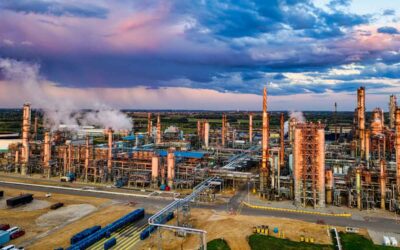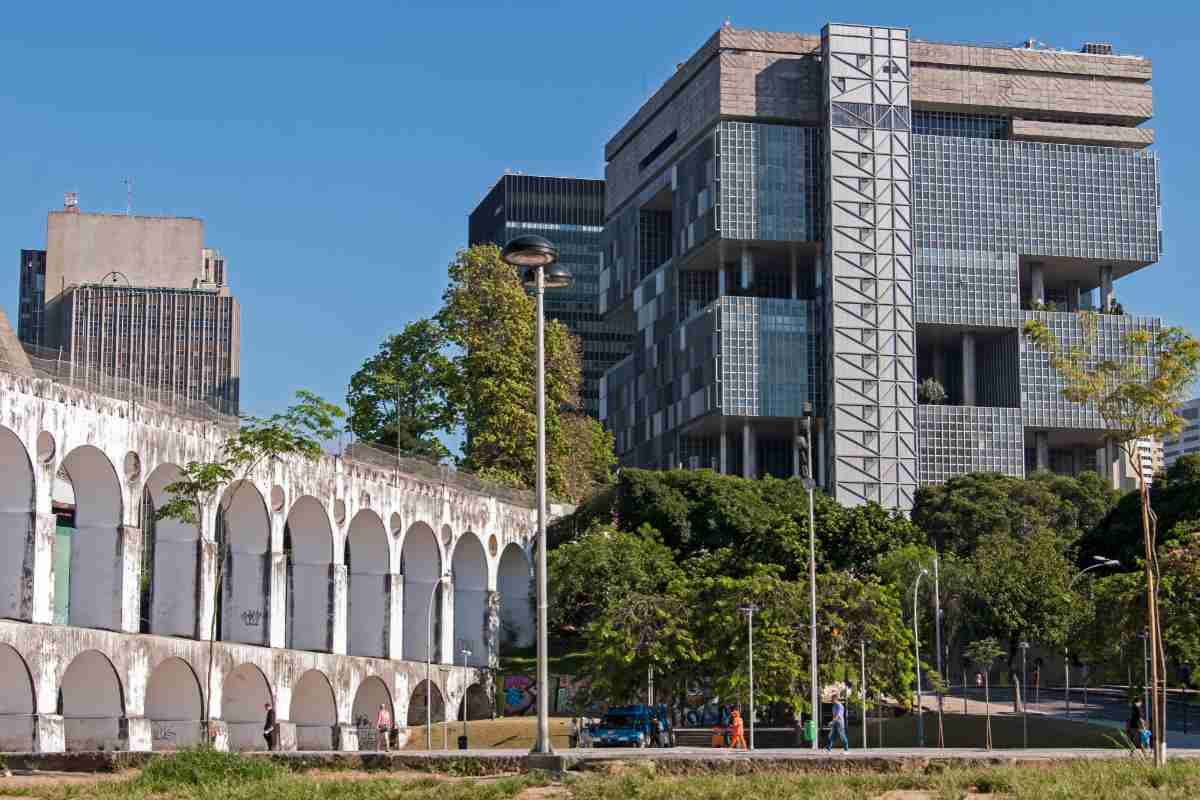
Petrobras announced that it will not renew production contracts for more than fifty fields from “Rodada Zero”, whose concessions are expiring or have already expired in 2025. This decision mobilizes ANP, state governments, and the private market to reoffer these assets, aiming to stimulate new operations, revitalize production, and optimize the use of mature fields and existing facilities.
The fields in question are from early contracts, dating back to the creation of the National Agency of Petroleum, Natural Gas, and Biofuels (ANP) and the first bidding rounds — with typical contract terms of 27 years — whose production phases ended in 2025 in the states of Ceará, Sergipe, Rio Grande do Norte, Espírito Santo, Amazonas, Bahia, and in the Campos Basin.
ANP is considering reintegrating these fields into the permanent offer program, allowing independent operators — including some not yet active in Brazil — to view them as portfolio opportunities. The advantage lies in the fact that these are already structured assets, with installed infrastructure, which could reduce entry costs and accelerate return to production.
Negotiations are ongoing regarding decommissioning: while some facilities have already begun the return process to ANP, others remain in “hibernation.” Petrobras has expressed interest in postponing certain immediate decommissioning obligations, so that companies taking over the fields may also assume those commitments.
Another relevant point is that many of these fields are located within the pre-salt polygon, meaning that, to be reallocated under new contracts, they will fall under the production-sharing regime, which may increase regulatory requirements and raise the economic burden of their exploitation.
In addition, there is a pending bill (PL 3.178/2019) that seeks to provide greater flexibility in the bidding model for areas within the pre-salt polygon, allowing the government to decide whether they should be offered under the concession or production-sharing regime. If approved, this bill may open new legal alternatives for the returned fields.
Petrobras’s decision to relinquish more than fifty Rodada Zero fields represents a significant turning point in the oil and gas sector, reactivating assets that had been idle or underutilized. This may yield economic benefits such as increased production, job creation, and royalties, as well as greater competitiveness and diversification of operators.
On the other hand, regulatory, technical, and environmental challenges must be addressed: decommissioning, licensing, the appropriate legal regime for pre-salt areas, and assurances of the economic viability of new operators. Making these operations feasible depends not only on private initiative but also on regulatory clarity, government support, and constructive dialogue between ANP, the federal government, states, and investors.
Foto: Canva