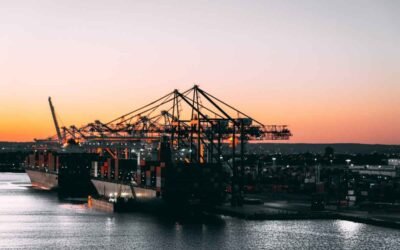
Brazil’s oil and natural gas production reached a new record in September 2026, according to the National Agency of Petroleum, Natural Gas and Biofuels (ANP).
Total production reached 6.12 million barrels of oil equivalent per day, including approximately 4.71 million barrels of oil and 223.98 million cubic meters of natural gas per day.
The pre-salt accounted for approximately 83.3% of national production, reaffirming its central role in Brazil’s energy industry.
The expansion is particularly relevant for Rio de Janeiro, where growing gas availability and established industrial infrastructure are creating opportunities beyond upstream production.
According to a new study released by Firjan, the state has a projected investment pipeline exceeding R$25 billion through 2030 involving petrochemicals and fertilizers.
The development of the Rota 3 pipeline and Petrobras’ Boaventura Energy Complex is strengthening the availability of natural gas and associated feedstocks for industrial use.
Market Impact
The growing availability of natural gas could support investments in:
- petrochemical production and processing facilities
- ammonia and urea manufacturing
- industrial gas supply infrastructure
- storage and logistics terminals
- engineering, construction and maintenance services
- port-based industrial complexes
Projects under consideration in Macaé and the Port of Açu could strengthen Rio de Janeiro’s position in Brazil’s fertilizer supply chain, while industrial modernization in Duque de Caxias supports further petrochemical integration.
Nevertheless, increased gas production does not automatically guarantee competitive industrial supply.
Transportation, processing costs, pricing structures and long-term supply commitments will remain important determinants of investment viability.
Legal & Contractual Implications
Industrial developers and investors should evaluate:
- long-term natural gas supply and transportation agreements
- price indexation and minimum-volume commitments
- take-or-pay and delivery obligations
- access to gas transportation and distribution infrastructure
- environmental licensing and industrial authorizations
- EPC and technology supply agreements
- project financing and corporate guarantees
- tax incentives and regulatory requirements
For foreign industrial companies, the combination of increased gas availability and existing port infrastructure may create attractive investment opportunities, provided that commercial and regulatory risks are properly allocated.
Photo: Canva