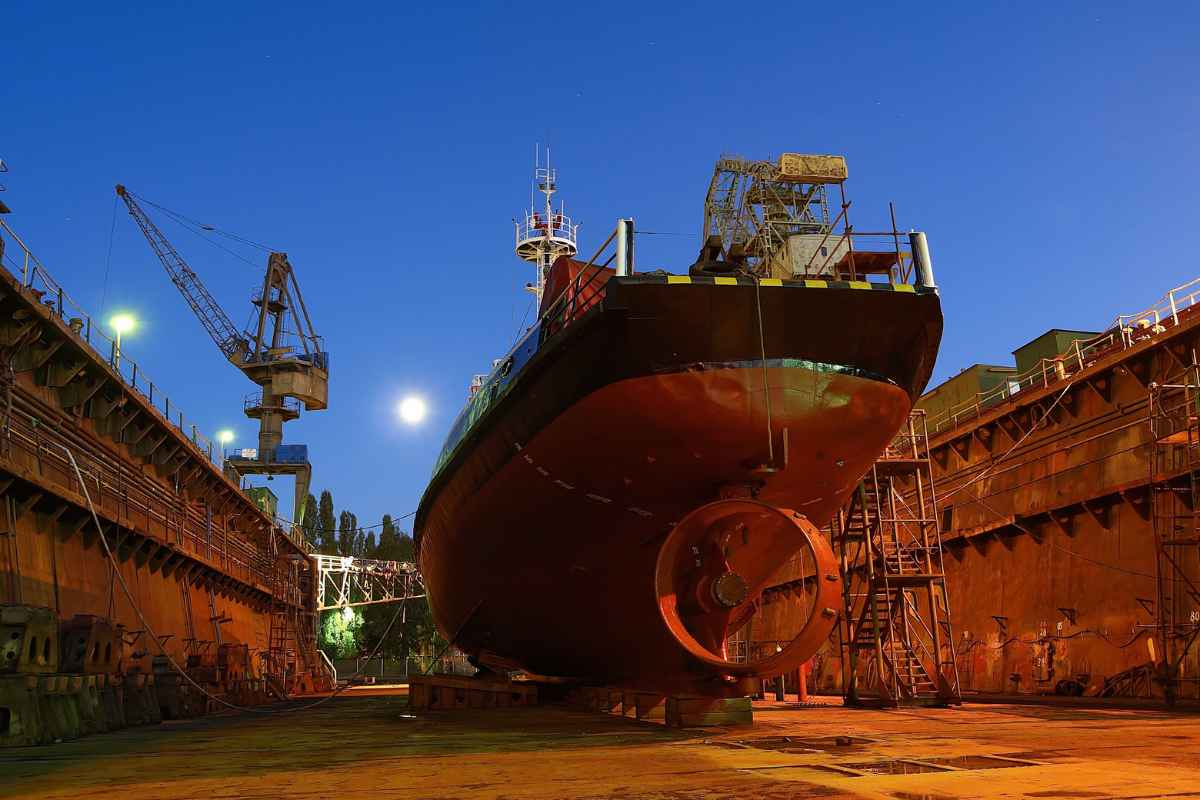
Transpetro President Sérgio Bacci has stated that the procurement model adopted for the company’s recent vessel acquisition programs allowed Brazilian shipyards to compete on equal terms with international yards.
The tenders were structured as open international competitions, subject to technical, economic and legal qualification requirements. Price equalization mechanisms were then applied to account for taxes and import-related costs that would affect vessels built outside Brazil.
Rather than guaranteeing awards to domestic yards, the model sought to compare proposals on an economically equivalent basis. Brazilian shipyards therefore remained responsible for demonstrating price competitiveness, technical capacity and compliance with the applicable tender requirements.
Market Impact
The procurement model may contribute to:
- renewed demand for Brazilian shipyard capacity
- increased investment in productivity and construction technology
- expansion of the domestic marine equipment supply chain
- greater participation by engineering and specialized service providers
- improved access to financing for projects supported by predictable procurement pipelines
The model may also serve as a reference for future acquisitions involving tankers, gas carriers, offshore support vessels and other strategic maritime assets.
Its long-term industrial impact, however, will depend on whether Brazilian yards can deliver vessels within the agreed price, quality and schedule parameters.
Legal & Contractual Implications
Shipyards, suppliers and financial institutions should assess:
- tender equalization formulas and applicable tax assumptions
- technical and economic qualification requirements
- construction milestones and payment schedules
- performance bonds, parent guarantees and other security packages
- delay liquidated damages and termination rights
- price adjustment and change-order mechanisms
- local supply-chain and subcontracting obligations
- inspection, acceptance, warranty and technical compliance procedures
For international bidders, the model requires careful comparison between local construction and import-related costs. For Brazilian yards, competitiveness at the bidding stage must be supported by robust execution and supply-chain contracts.
Photo: Canva